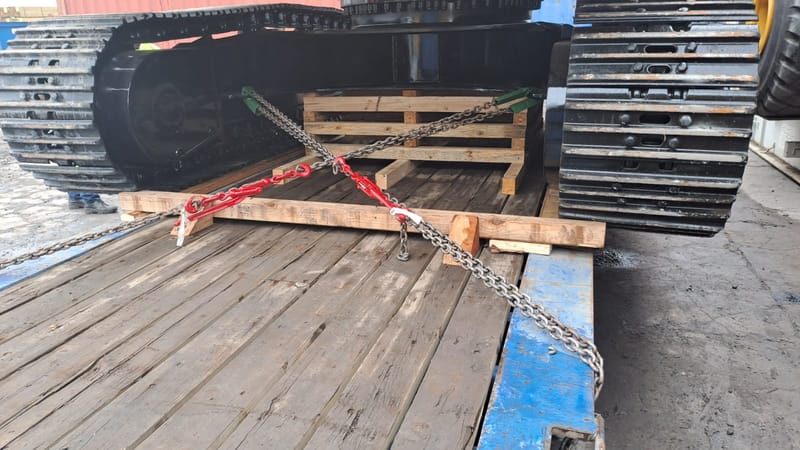
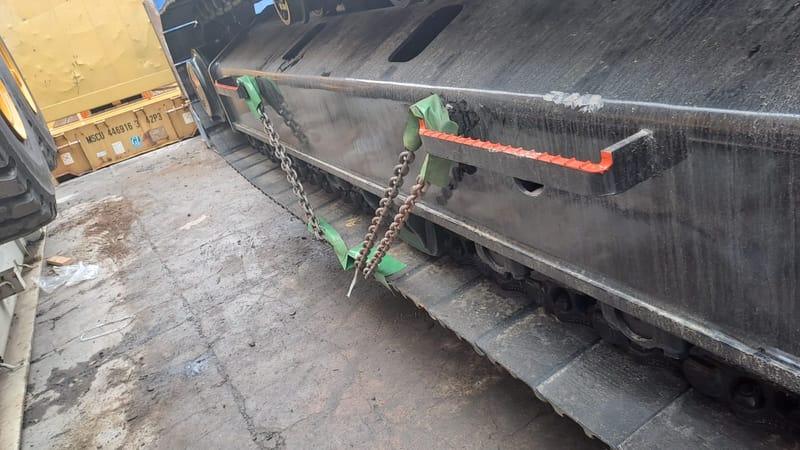
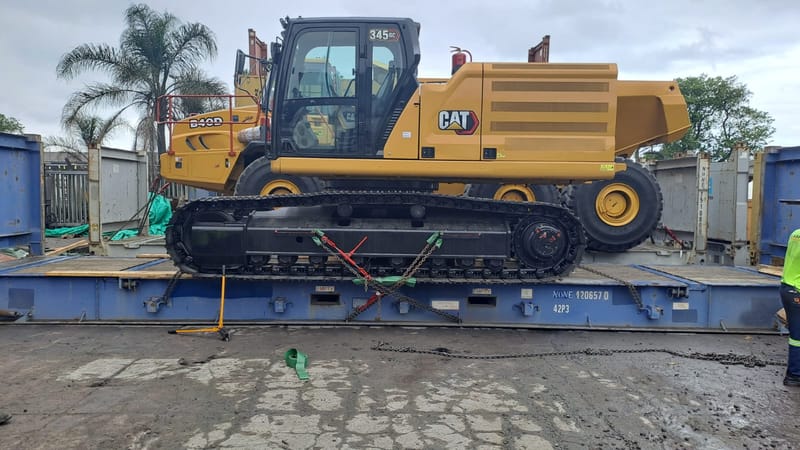
CAT 345 excavator loaded on a 40' flat rack
Introduction
1. Pre-Loading Phase (Documentation & Inspection) - Documentation & Risk Assessment: Verify cargo dimensions, weight, and center of gravity. Complete a Job Safety Analysis (JSA) and ensure all customs, import/export, and abnormal load permits are secured. - Cargo Preparation: The machinery must be cleaned, free from loose soil/debris (biosecurity requirements), and fluids drained to a specified level. - Pre-Inspection: Inspect steering, brakes, and undercarriage/tyres (if running). Ensure lashing points are adequate and unobstructed. - Safety Briefing: Conduct a toolbox talk for all personnel involved, defining responsibilities (operator, spotter, lashing team). 2. Loading Procedure (Maneuvering & Positioning) - Site Preparation: Ensure the loading area (ramp or dockside) is flat, level, and clean of oil or debris. - Controlled Loading: Machinery is driven or lifted slowly (slow and steady) onto the vessel. A spotter must be used to guide the operator via hand signals, particularly when the center of gravity shifts during ramp navigation. - Positioning: Machinery is positioned exactly according to the ship's stowage plan, ensuring proper weight distribution over the deck’s structural members to avoid overloading. - Shutdown Protocol: Once in position, the engine is shut down, parking brakes applied, and attachments (buckets, blades if applicable) are lowered to the deck. 3. Securing and Lashing Procedure - Chocking: Wheels or tracks are chocked immediately to prevent movement before lashing. - Certified Lashing: The machinery is lashed down using certified heavy-duty steel wire ropes, chains, and turnbuckles, attached only to manufacturer-designated lashing points. - Cross-Lashing: Lashing is done in a cross-pattern (port to starboard, starboard to port) to counteract sideways, forward, and rearward forces. - Double-Check: Lashing points are checked to ensure no damage to hydraulic hoses or sensitive components. 4. Final Verification - Inspection & Certification: A Marine Surveyor or Chief Officer inspects all lashing to certify the cargo is sea-fastened (approved to sail). - Post-Load Report: A final report with photographs is documented, showing the machinery and lashing condition before departure. 5. Summary of Strict Controls - Personnel Safety: PPE is mandatory (hard hat, high-vis, steel-toed boots). No personnel are allowed on the deck during active crane lifting. - Cargo Safety: If equipment is not working (non-running), it is loaded using specialized lifting gear and cranes. Environmental Control: All hydraulic leaks must be repaired before loading.
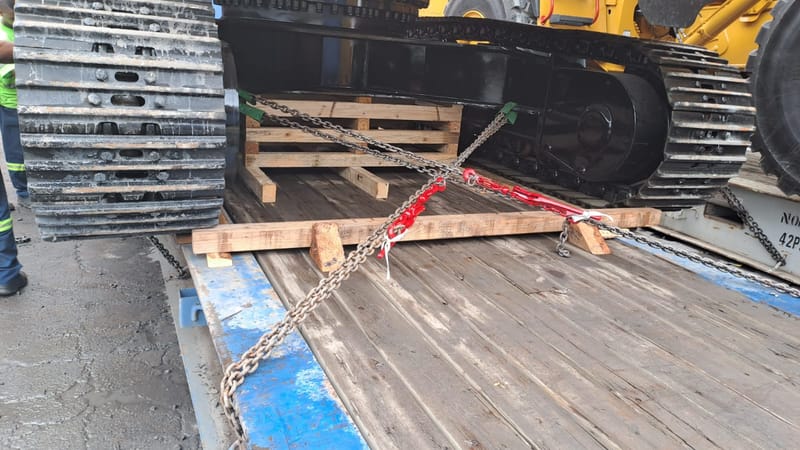
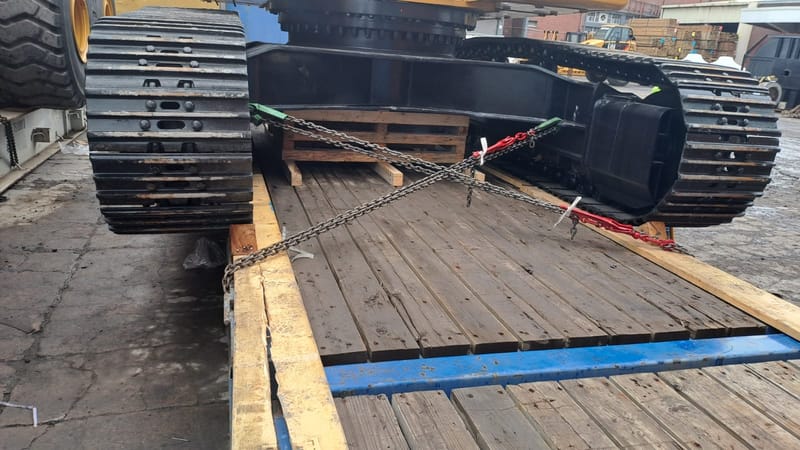
Lashing